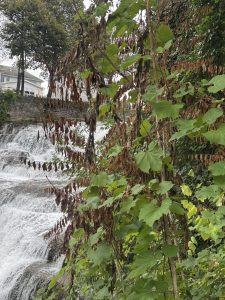
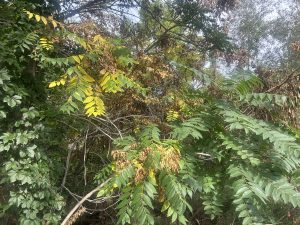
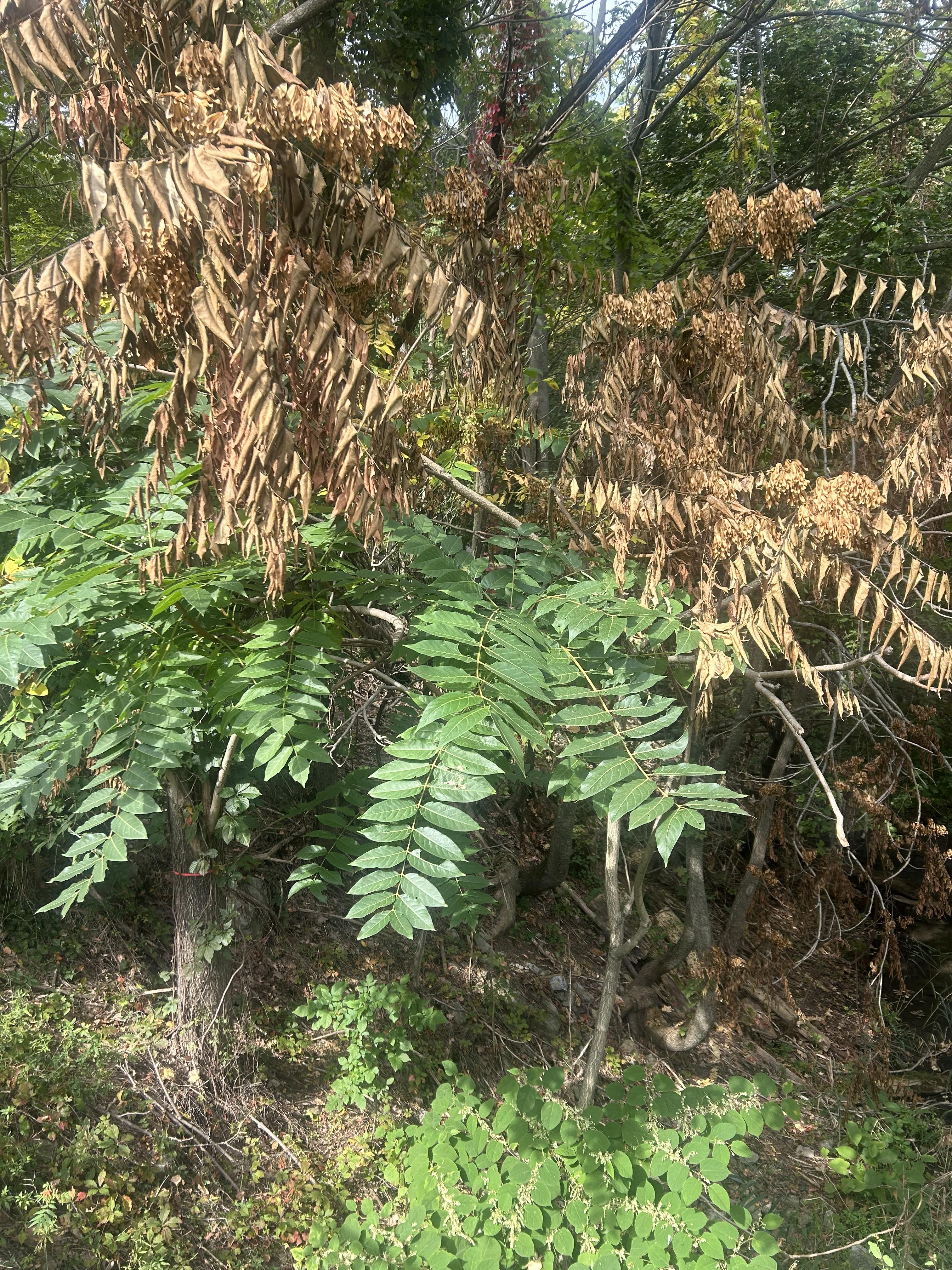
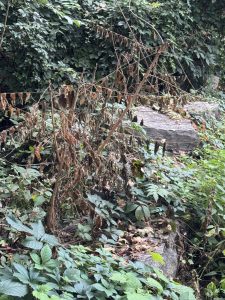
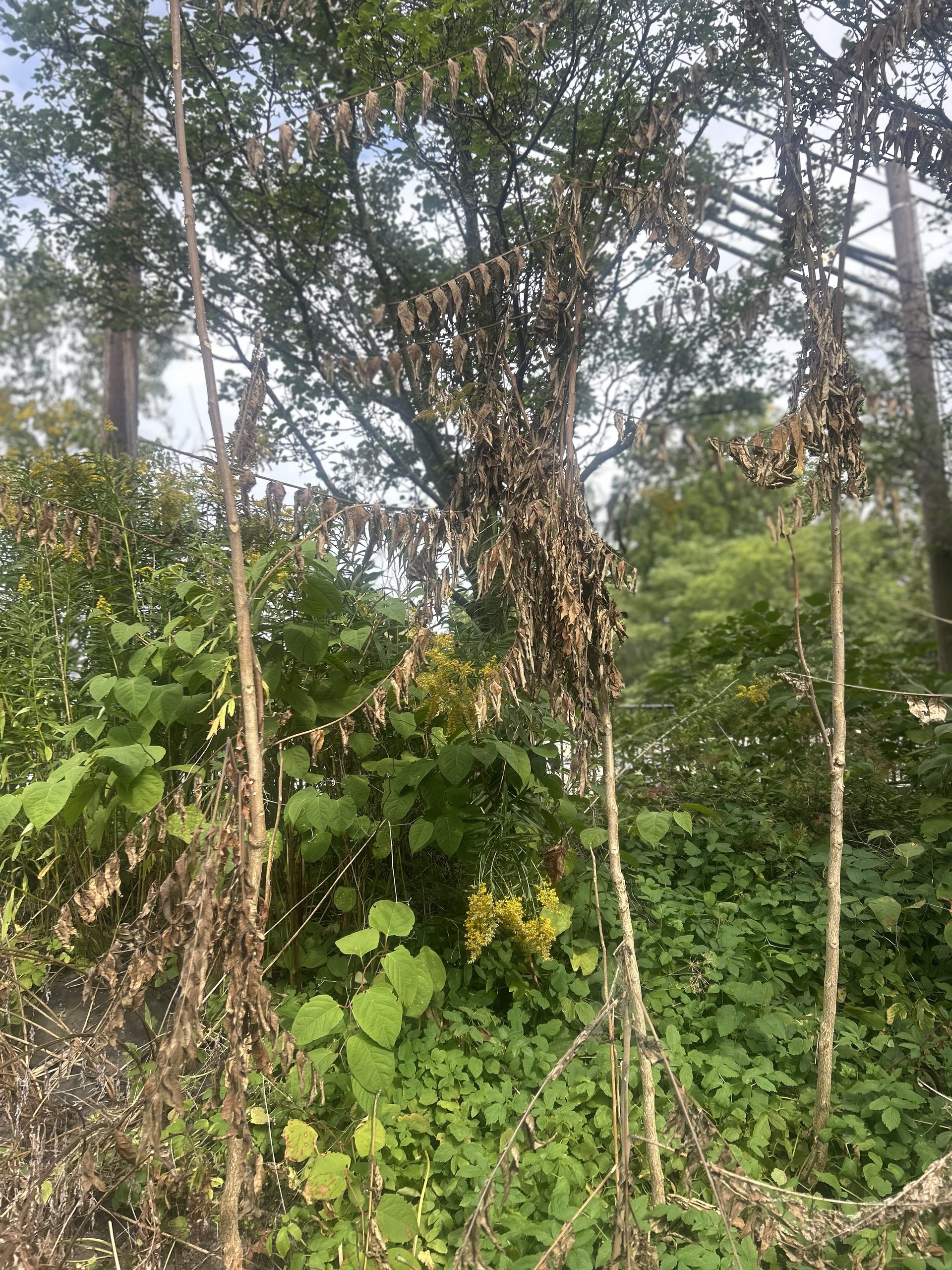
Recent visitors to Glen Park may have noticed significant browning and decline in the leaves of many Tree of Heaven (Ailanthus altissima). This is an expected sign that treatment is working.
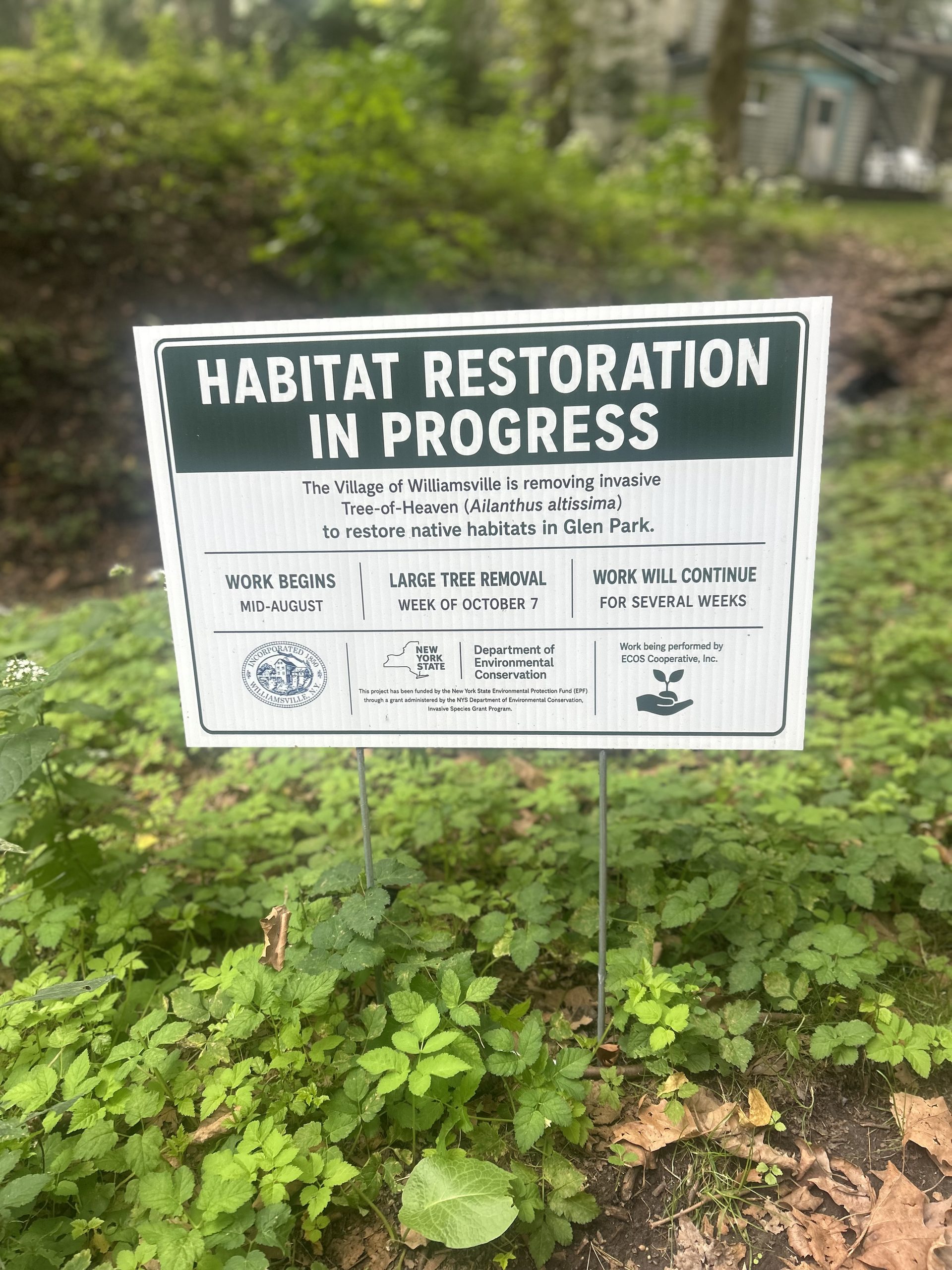
ECOS Cooperative, a Western New York environmental cooperative specializing in ecological restoration and sustainable land management, has completed the initial treatment phase of the Village of Williamsville’s Ailanthus Abatement Project, which is focused on controlling Tree of Heaven throughout Glen Park.
The project has been funded by the New York State Environmental Protection Fund (EPF) through a grant administered by the NYS Department of Environmental Conservation Invasive Species Grant Program.
Why aren’t the trees simply cut down?
Tree of Heaven has an extensive root system and can respond aggressively when it is cut or damaged. Removing a live tree without first treating it with herbicide can stimulate the roots to produce numerous new shoots, known as root suckers, potentially making the infestation worse.
Instead, the trees are treated while standing and given time to absorb the herbicide. The treatment moves through the plant and into its root system, helping to prevent new growth before larger trees are eventually removed.
The withering leaves now visible throughout portions of Glen Park are part of that process.
How is the treatment applied?
ECOS uses targeted, low-volume application methods based on the size, location and growth pattern of the Tree of Heaven being treated.
During the initial treatment phase, Tree of Heaven seedlings and root suckers were treated using a low-volume foliar application. A controlled amount of herbicide is applied directly to the leaves of the targeted plants, where it is absorbed and carried through the plant and into the root system.
According to ECOS, applications are conducted using a precise approach designed to target the invasive plants while minimizing impacts to surrounding habitat. There is no broad application of herbicide throughout the park. Because Tree of Heaven is a non-native species, the likelihood of pollinators visiting the plants during the application period is very low. Treated areas are safe for public entry within 24 hours of application.
Why was Tree of Heaven prioritized?
When developing the work plan for Glen Park, the Village had the option to target a wider variety of invasive species. Instead, the Village chose to concentrate treatment on Tree of Heaven, allowing the project to address a priority invasive species while limiting the overall amount of herbicide used in the park.
The timing of the work was also intentional. Late summer is an effective treatment period because Tree of Heaven is beginning to move nutrients from its leaves toward its roots. Treating the plant during this period helps carry the herbicide into the root system, where it can more effectively prevent future sprouting.
What happens next?
Over the coming weeks, visitors may continue to see treated Tree of Heaven decline as the treatment works through the plants and their root systems.
In early October, ECOS will use a second application method to address remaining Tree of Heaven above the falls along the riparian area and wall. Because this area is more difficult to access and environmentally sensitive, crews will use ropes to safely reach individual trees and apply a DEC-approved, aquatic-safe herbicide directly to the lower portion of the trunks using a foam roller. This targeted basal bark treatment allows crews to treat individual Tree of Heaven while limiting contact with surrounding vegetation.
Removal of larger, previously treated Tree of Heaven is also scheduled to begin in October. Allowing time between treatment and removal helps ensure the herbicide has moved through the trees and into their root systems before they are cut, reducing the potential for new growth.
Additional project updates will be shared as work progresses.